

Don't Just Prompt. Engineer an Argument.
Part 1: Introducing an Intentional AI Style. A Framework for Human-Centric Artificial Intelligence. Strategic AI Literacy Series.
Look at this … What is it? A Car? A Joke? … An AI-generated hallucination?

In 1933, Buckminster Fuller unveiled the Dymaxion car. With its teardrop shape and three wheels, the car wasn’t merely a vehicle; it was an argument. A defiant answer to a question most automakers ignored: “What could a car be?”
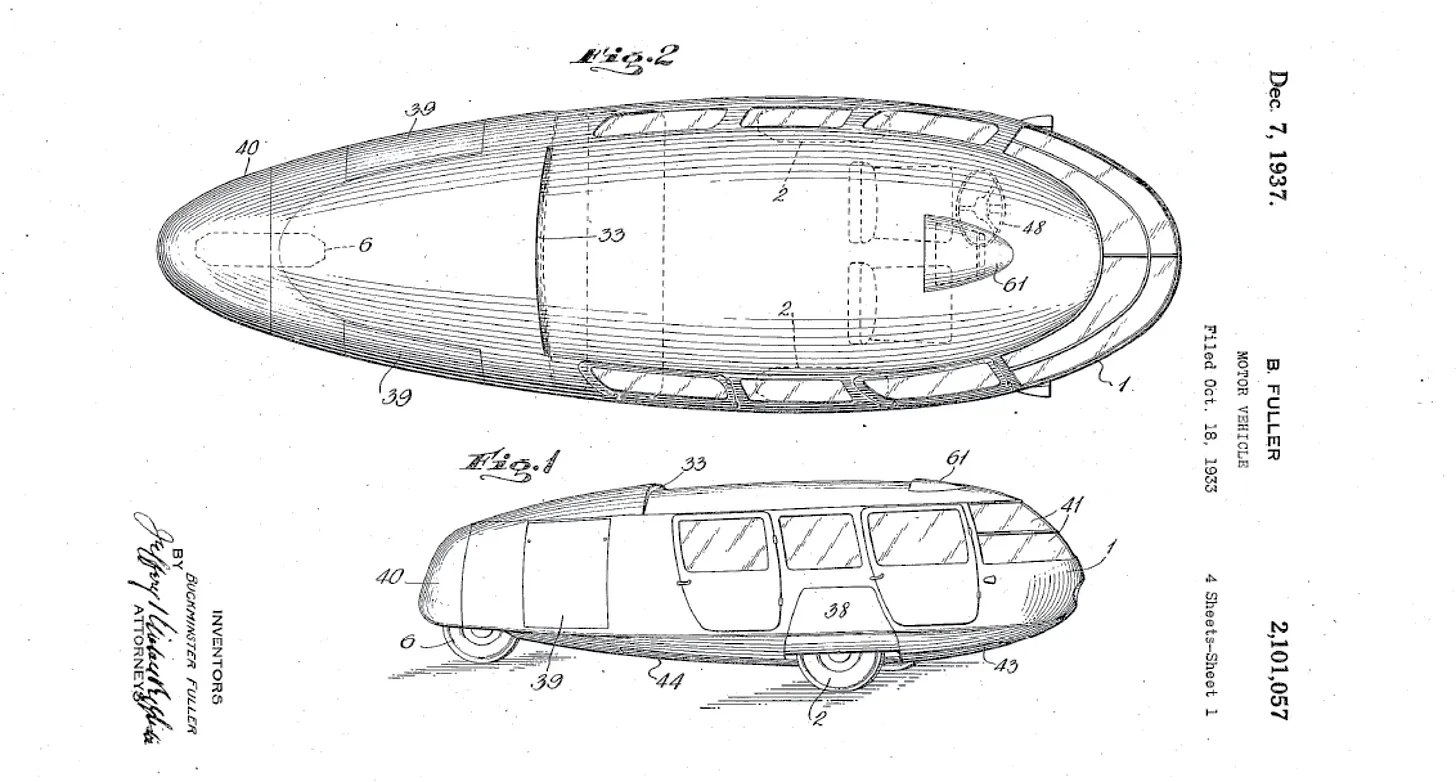
What could AI be? Generative AI presents a similar challenge. Will we settle for faster, cheaper outputs, or will we engineer better arguments about what we intend to achieve?
The AI Vending Machine is Broken
The common approach treats this powerful engine as a vending machine: feed it generic prompts, receive predictable, transactional outputs. The result is a deluge of “AI work slop”—low-quality, generic content that erodes productivity and dilutes the brand.
This is not just a quality problem; it is a strategic failure. Offloading thought erodes our capacity for self-direction, ceding control to AI, and undermining the core of our human autonomy and strategic advantage.
From Prompting to Anticipatory Design
Reclaiming autonomy demands Fuller’s “anticipatory design.” This means we stop reacting to AI and start directing it with intent. We can do this by first embedding values and constraints at the outset to preempt failures and generic responses. This is what Fuller called anticipatory design. And, second, using a clear intentional prompt framework—Intentional AI Style (IAS)—to ensure AI acts as an extension of our intent and brand integrity, achieving authentic outcomes.
Fuller engineered an argument challenging the mass production of his times. Similarly, IAS provides the method for engineering an argument with AI, transforming it from a passive tool for outputs into a dialectical partner for achieving outcomes. It reclaims AI as an Assisting Intelligence—a collaborator that sharpens our thinking.
The IAS framework is built on four “primers” that allow you to design the conversation:
The Intent Primer: Defines the core argument you’re making, shifting the goal from a tactical output to a strategic outcome.
The Human Primer: Infuses the AI with your authentic brand voice, values, and ethical guardrails.
The Prompt Primer: Provides clear, unambiguous specifications for the AI’s role, task, and constraints.
The Agile Primer: Establishes an iterative loop of refinement, using the AI’s response to sharpen your own question.
Balancing the Primers: The Art of Intentional AI Style
While the primers provide structure, the true art of IAS lies in balancing them. An overly restrictive Human Primer yields robotic outputs; an overly loose one invites brand chaos. A rigid Prompt Primer stifles novel connections; a vague one produces generic nonsense. The goal is not rigid instruction, but strategic guidance: provide enough structure to direct the AI without suffocating the serendipity that makes it powerful.
The Dymaxion Impact
Like the Dymaxion car, IAS is more than a tool; it is a new way of thinking.

Buckminster Fuller with his Dymaxion Car. While it was a commercial and marketing failure, it challenged conventions and opened new ways of thinking that impacted decades of design. Image courtesy of Alamy - Rights reserved.
Buckminster Fuller with his Dymaxion Car. While it was a commercial and marketing failure, it challenged conventions and opened new ways of thinking that impacted decades of design. Image courtesy of Alamy - Rights reserved.
The most valuable result of IAS is not the AI’s answer, but the clarity it demands in your own question. That clarity is the argument. In an age of AI noise, that engineered argument is your decisive advantage to lead AI.
A Framework for Human-Centric Artificial Intelligence
Strategic AI Literacy
This post is part one of a series that lays out the core challenge of the AI era: the Dickensian paradox of high personal usage and low strategic return. To bridge this gap, organizations must move beyond the transactional “AI Vending Machine” and adopt the mindset of Assisting Intelligence, in which AI’s purpose is to augment human skill and judgment.
To learn more, visit: learn.assistingintelligence.com